


Your whole workforce, in one portal
Employee Portal — time, personnel and payroll
Everyone logs in from their phone or computer and finds their own things: clock in, request holidays, check their calendar, upload their documents and sign their payslip with a finger. And from the same place you review working hours, keep track of expiry dates and send your payroll provider the pre-payroll built from the clock-ins.
⏱️ Clock-in recorded
Today · 07:58 · location at clock-in
🏖️ Holidays 4-8 August
5 days · awaiting approval
💶 October payslip
Ready to sign
Three parts, one portal
What today lives in five spreadsheets, a folder and your inbox
The Employee Portal is organised into three parts that work together: what happens with each person’s time, what you know about them and what you pay them. Start with the one you need most; the others are already there, on the same data.
Time
Clock in, plan and review working hours
Personnel
Records, documents and communication
Payroll
From the clock-ins to your payroll provider, and back
Gallery
Features in detail
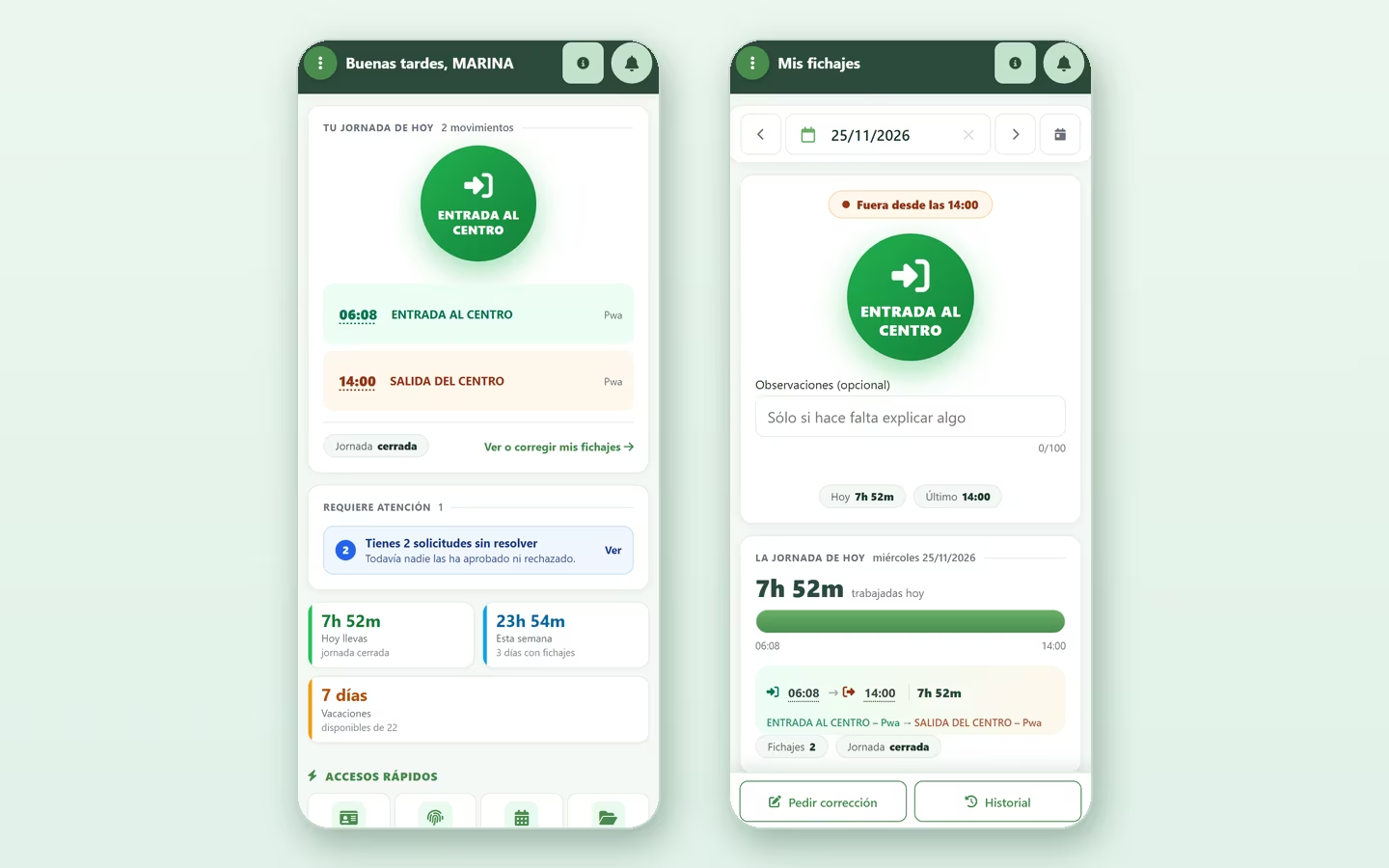
Clocking in from the phone
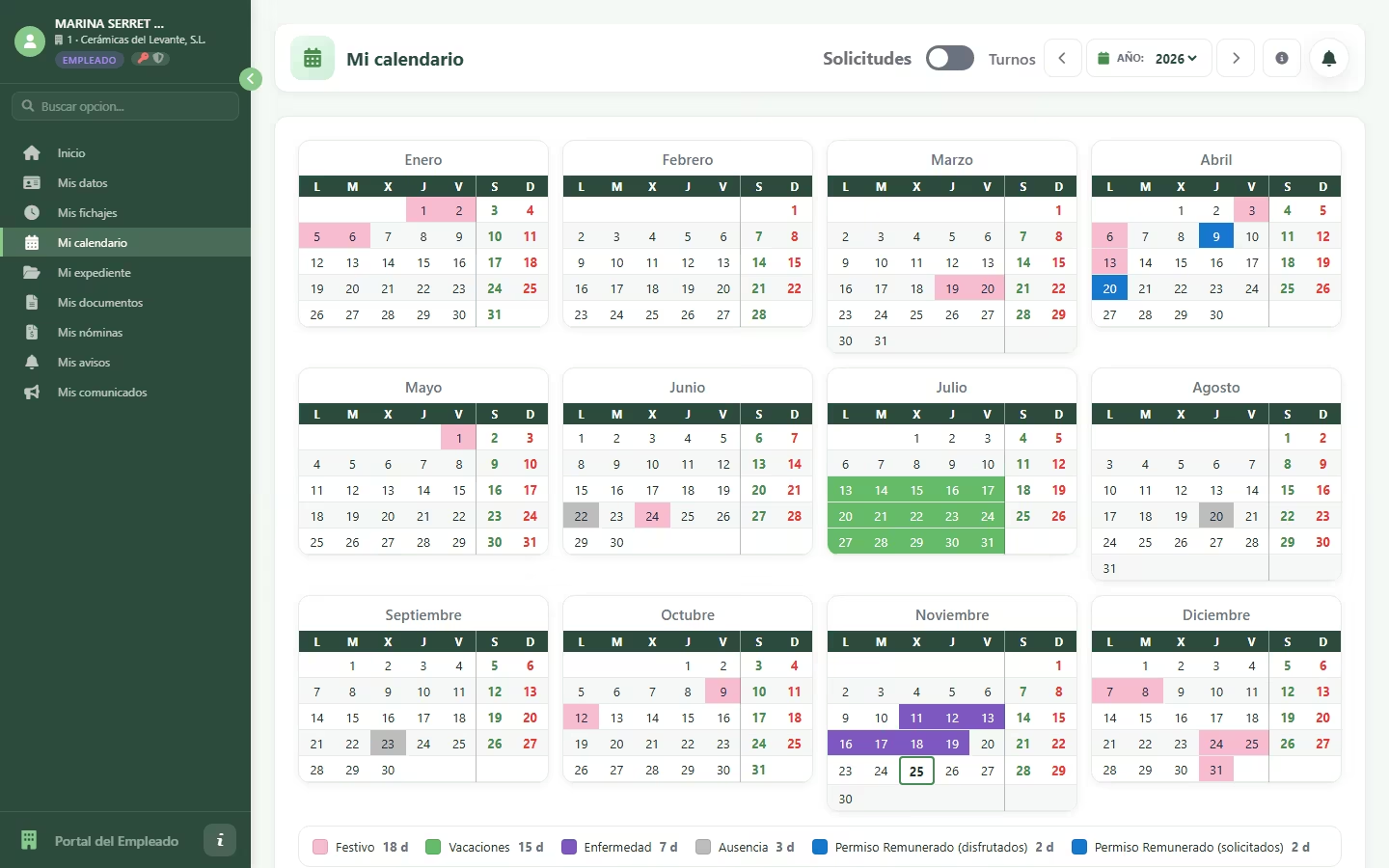
Calendar, shifts and holidays
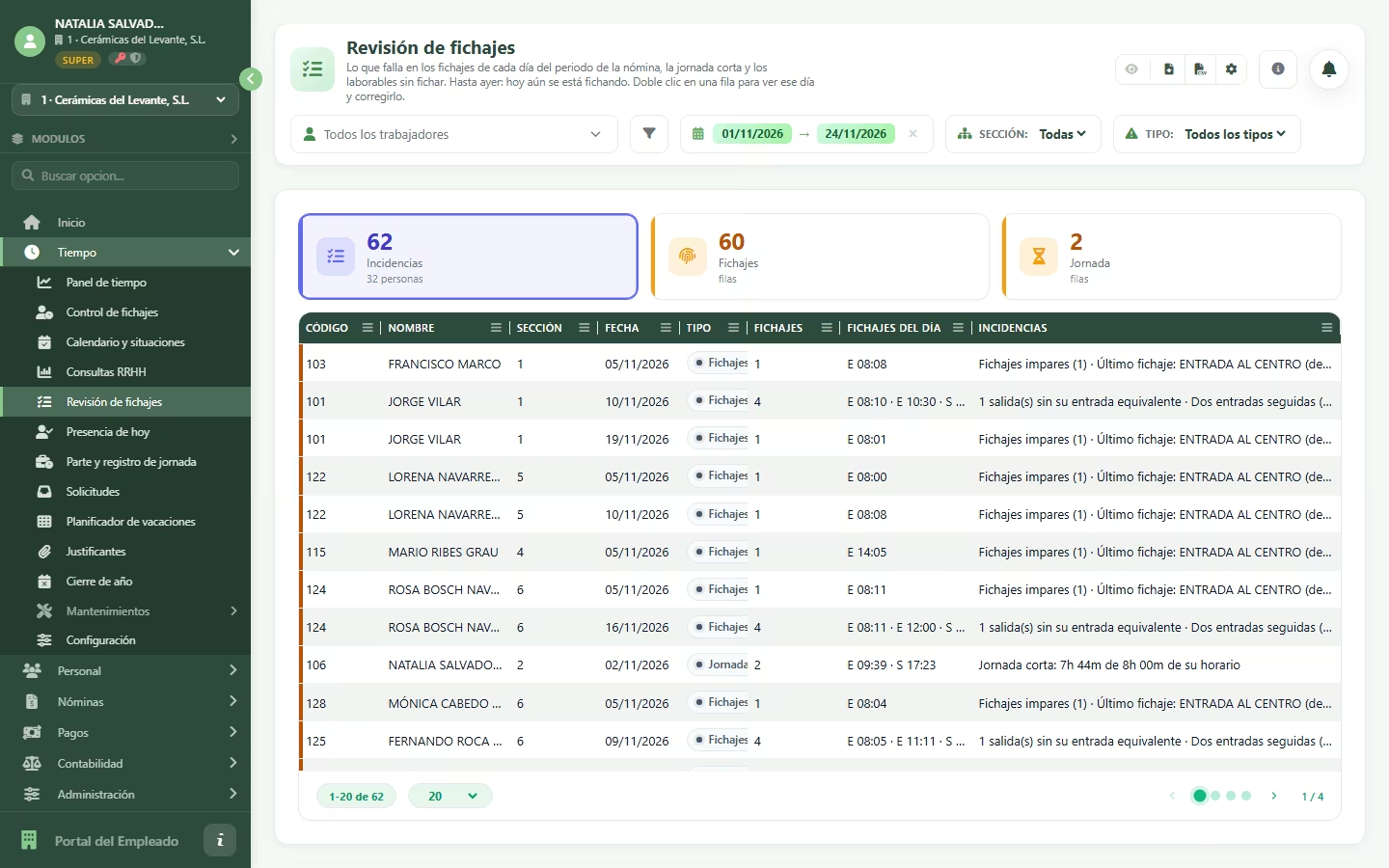
Reviewing clock-ins, deleting nothing
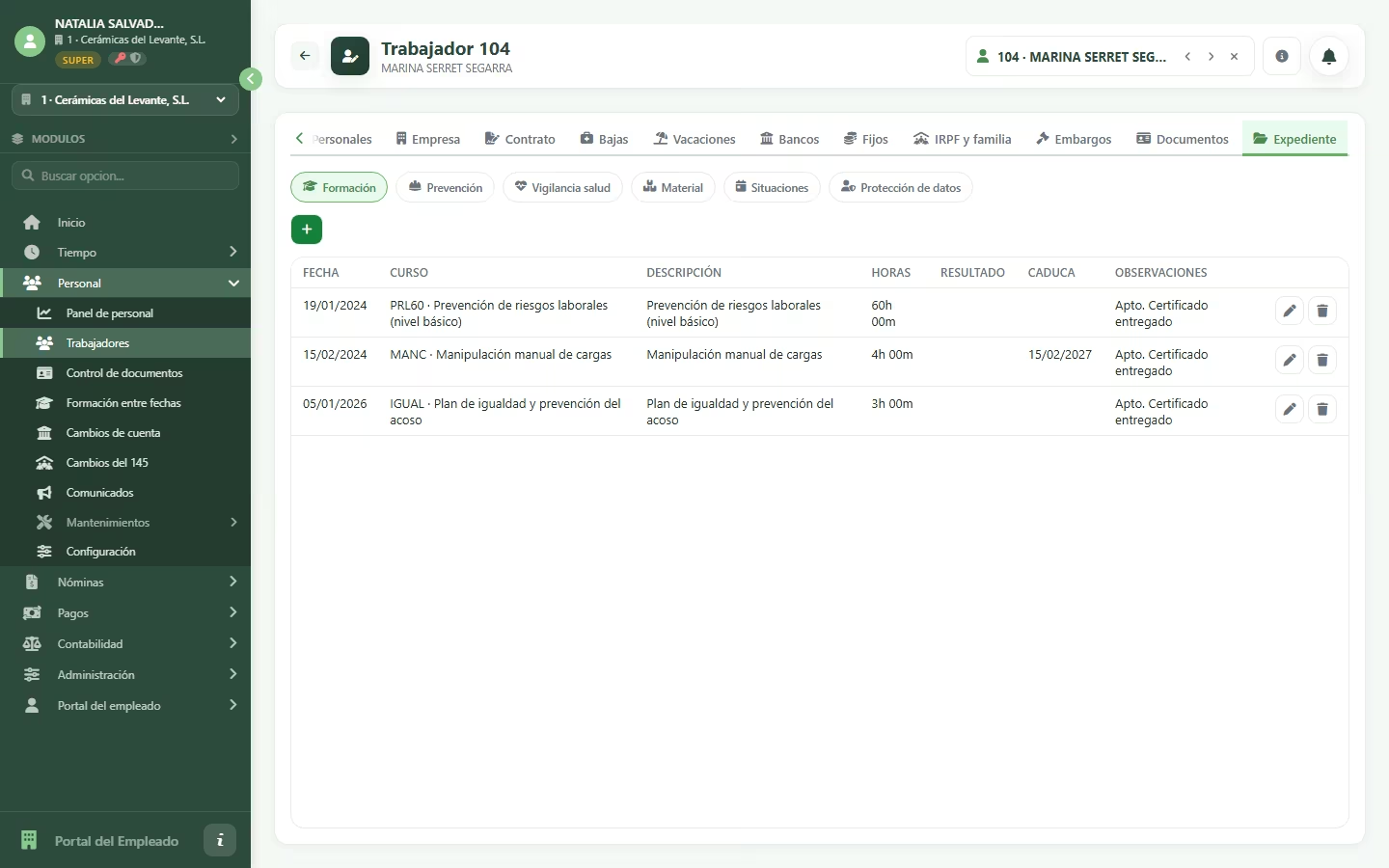
Each person’s record, with their training
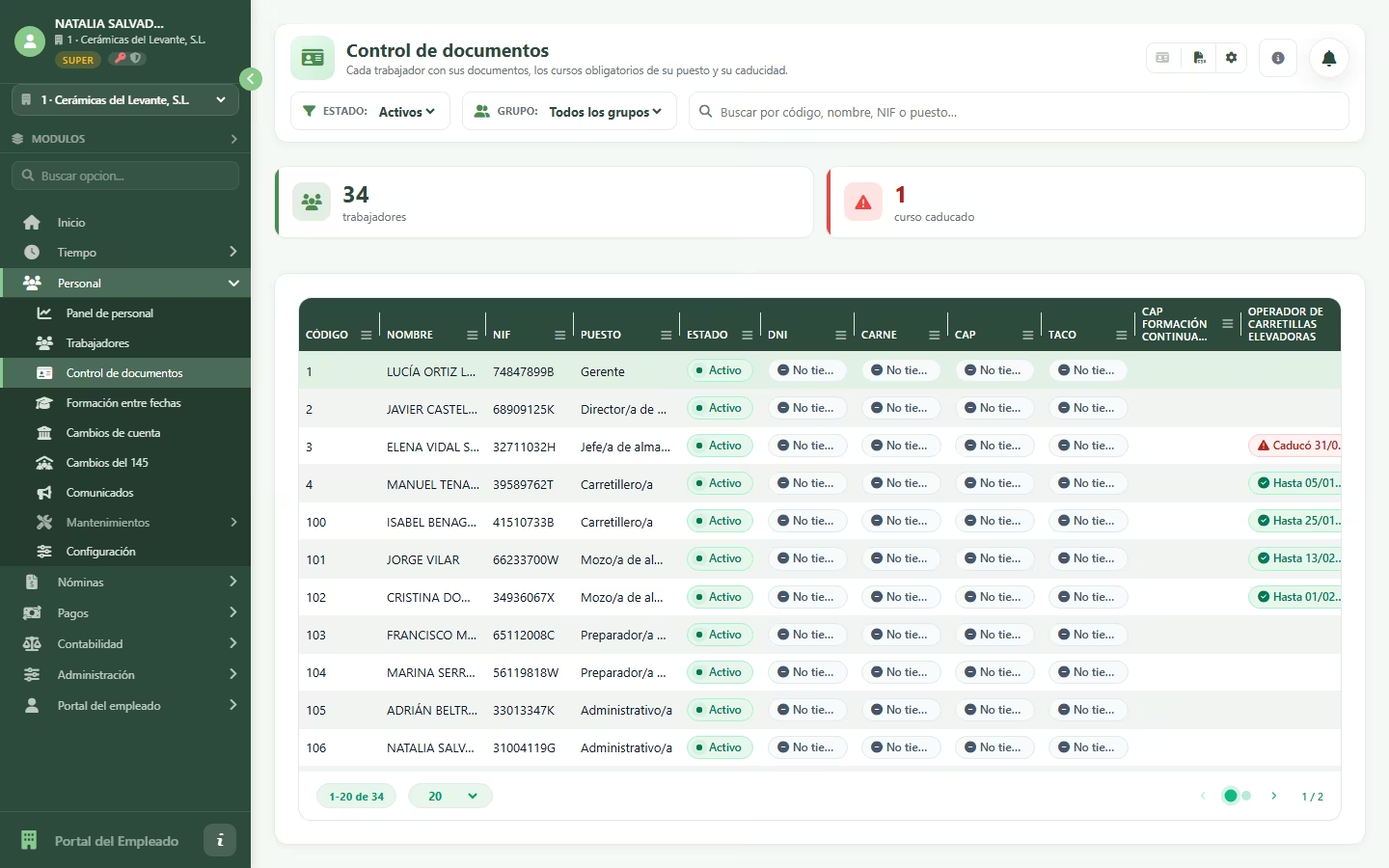
Documents with their expiry date
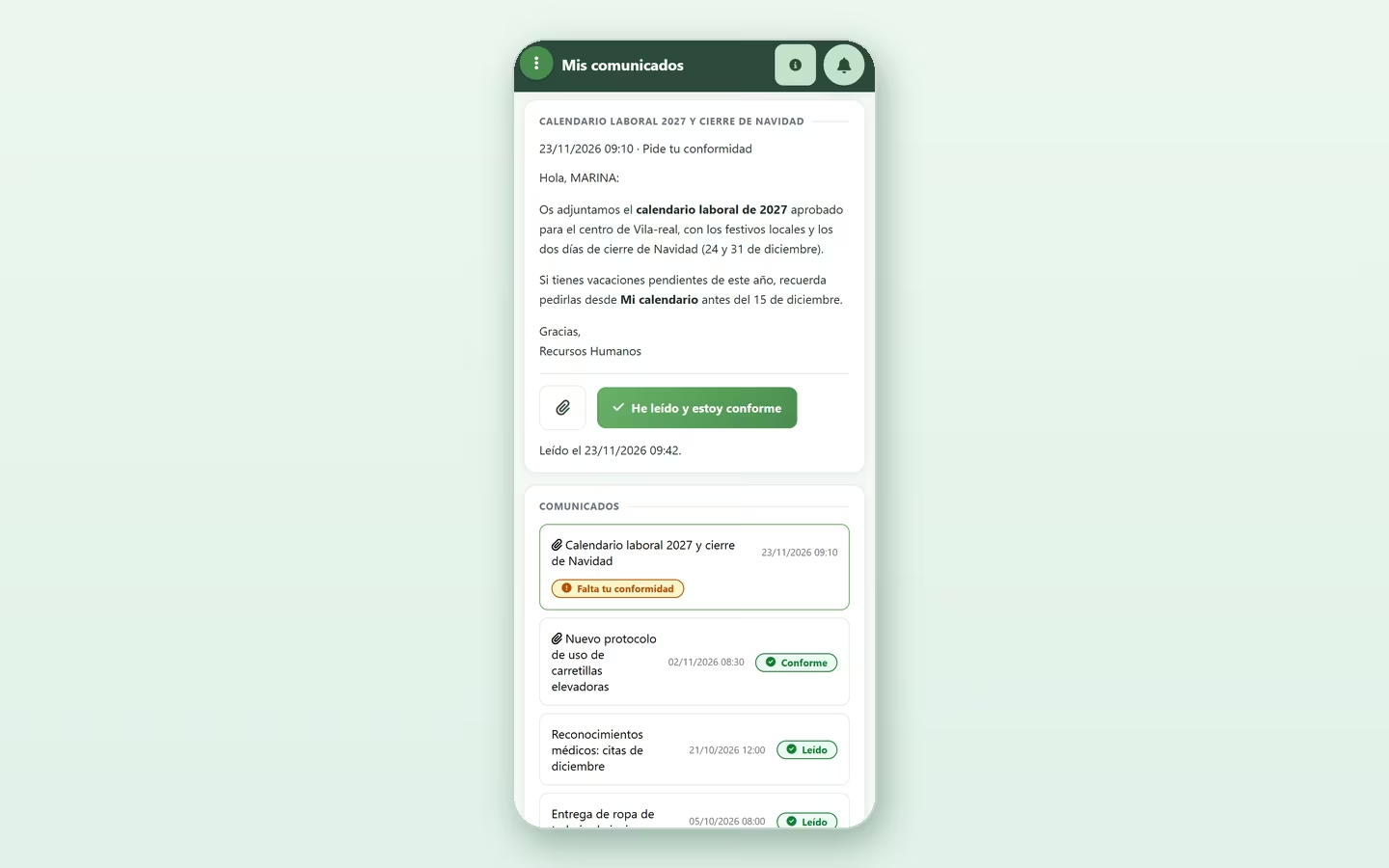
Notices with a phone alert
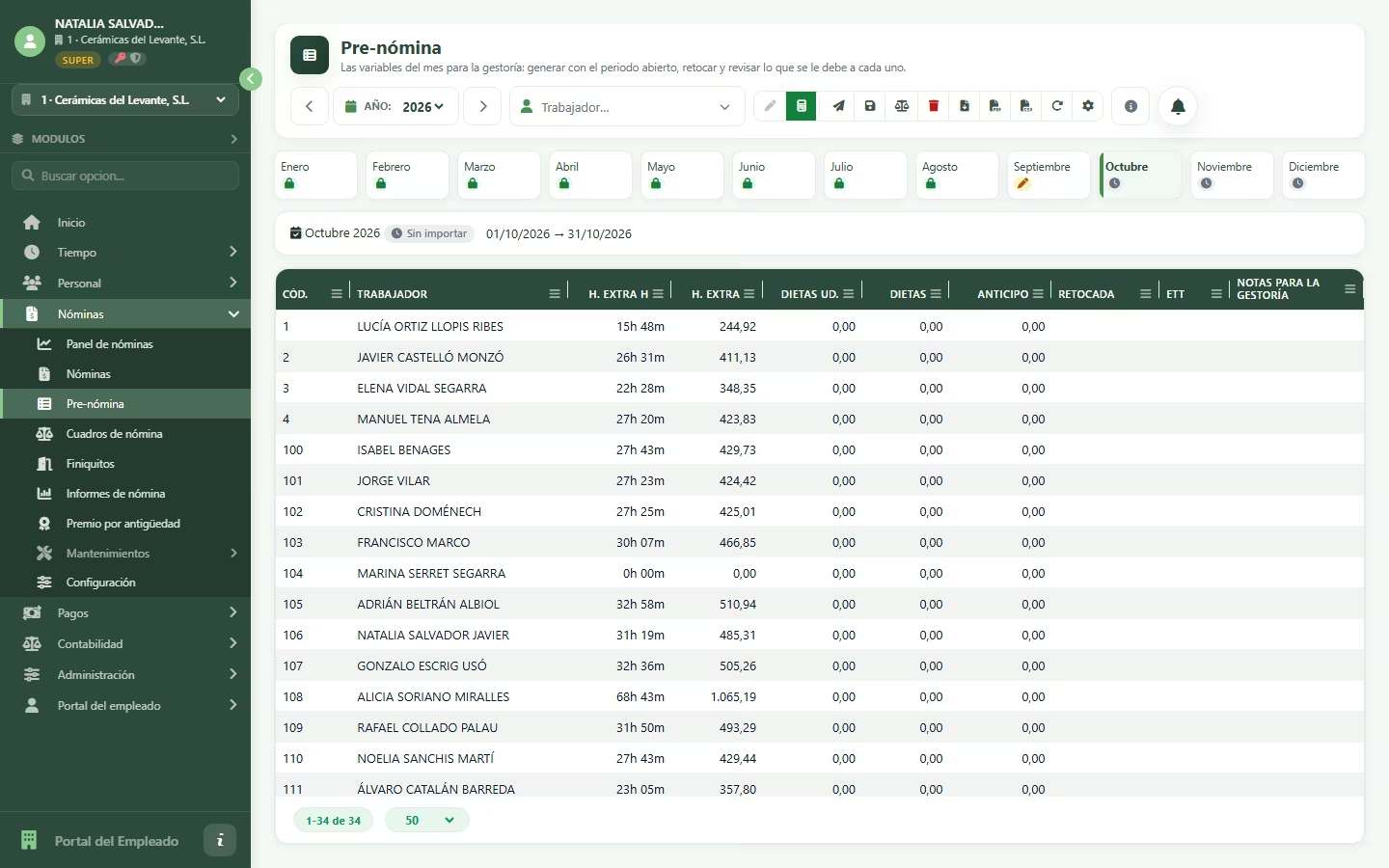
Pre-payroll built from the clock-ins
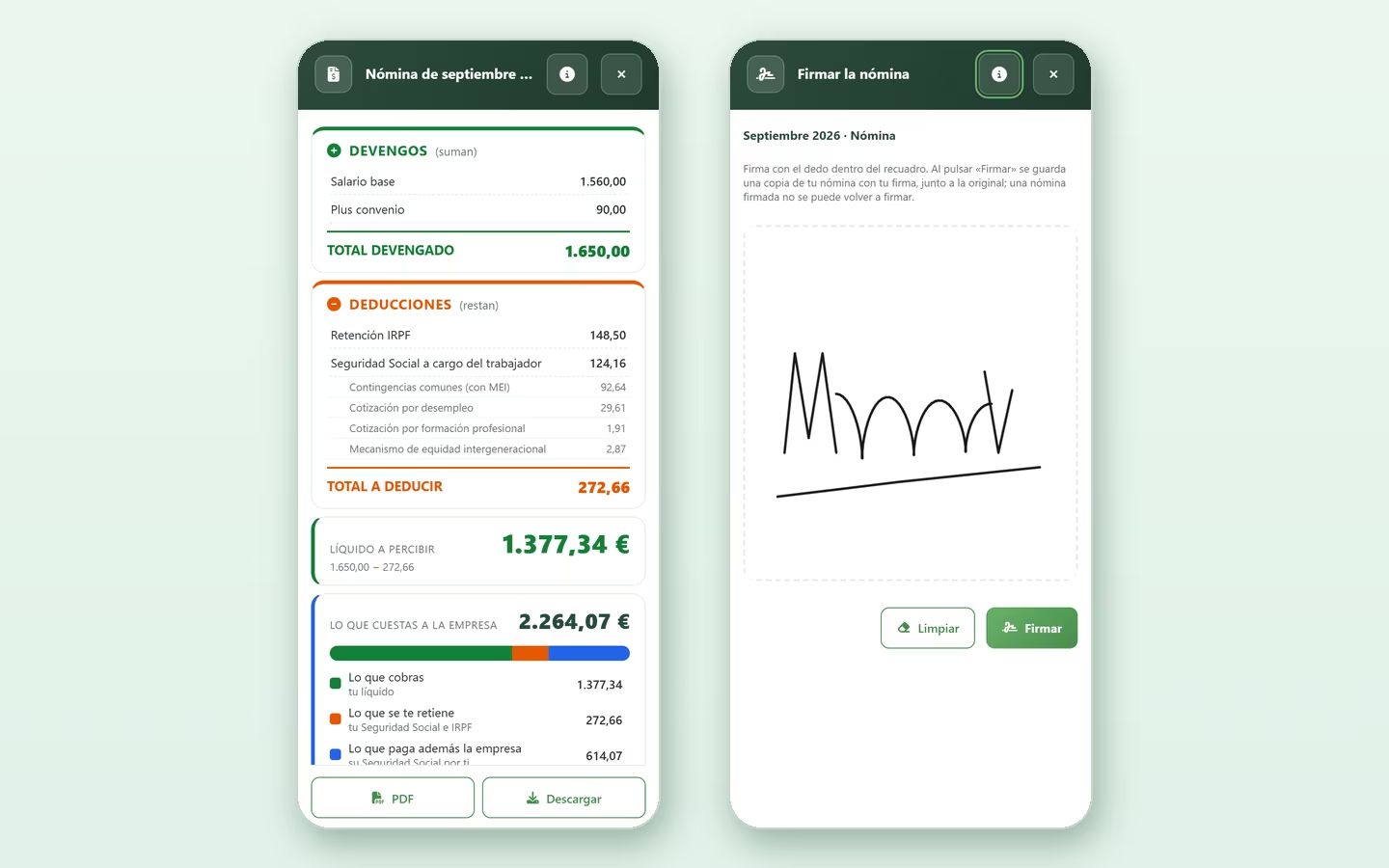
The payslip on the phone, signed with a finger
⏱️ Time
Clock in with two taps, and working hours that add up
Clocking in stops being a chore: employees do it from the browser on their phone or computer, and managers see on one screen who is in, who is missing and what needs reviewing.
-
Web and mobile clock-in. Nothing to install: it opens in the browser and can be added to the home screen like any other app.
-
Location only when clocking in. If the company turns it on, the place where someone clocked in is saved at that moment. Nobody is tracked during the day.
-
Calendar and shifts. Bank holidays, working hours and each person’s shifts, visible to everyone who needs them.
-
Holidays and leave. Requested from the portal, approved by the manager, and the calendar updates itself. Everyone sees the days they have left.
-
Review without deleting. If a clock-in is wrong, it gets corrected; the original is not deleted: who changed it, when and why is kept.
🗂️ Personnel
Everything about each person, up to date, without chasing anyone
Each employee’s record is no longer spread between the payroll provider, a folder and email. And whatever expires warns you before it does.
-
Records and contracts. Details, job, workplace, contracts and their history, in a single record.
-
Documents with expiry dates. ID card, driving licence, CPC, tachograph card… The portal warns you in good time about what is about to expire, before a lorry has to stay parked.
-
Training and check-ups. Each person’s courses and medical check-ups, with their dates and documents.
-
Their details and form 145. Employees update their address, bank account or family situation themselves, and you review it before accepting it.
-
Notices with an alert. A circular, a change of hours or a safety note reaches the phone with an alert, and you know who has read it.
-
Former employee access. People who leave the company can still look up their payslips and clock-ins for 4 years, without asking you.
💶 Payroll
The payroll cycle, from start to finish
Your payroll provider still runs the payroll, with their own software, as always. The Portal takes care of everything before and after: the data they need, checking what they send back and getting it to each person, to the bank and to the accounts.
- 1
Pre-payroll from the clock-ins.
Hours, absences, holidays and advances for the month, taken from what is already in the portal.
- 2
To your payroll provider.
The pre-payroll comes out in a format their software understands (A3NOM, for example). No retyping.
- 3
Import and cross-check.
The payslips the provider sends back are imported and compared with the pre-payroll. Differences stand out before anyone is paid.
- 4
Finger signature.
Each employee sees their payslip on the phone and signs it with a finger. You see who has signed and who has not.
- 5
Advances and payments.
Advances are requested and deducted, and the SEPA payroll batch is ready for the bank.
- 6
Form 111, social security and journal entry.
With the payslips imported you have the figures for form 111 and for social security, and the journal entry for the accounts.
ℹ️ The Employee Portal does not calculate payroll: your payroll provider does. The portal gives them the data and does the rest.
Video
The Employee Portal in a few minutes
A tour of the three parts: clocking in, each person’s record and the payroll cycle. The video is in Spanish.
Definition
What is an employee portal and what problem does it solve?
An employee portal is the place where everyone in the company finds everything that is theirs —their clock-ins, their calendar, their documents, their payslips— and where HR manages it all without chasing anyone down the corridor or by email.
The problem it solves is the usual one: working hours in one app, holidays in a spreadsheet, licences in a folder and payslips in the payroll provider’s emails. Four places nobody reconciles until an inspection, an expired licence or a payroll mistake comes along. Here everything comes from the same data: the clock-ins feed the pre-payroll, and the payslip comes back to the same place to be signed and paid.
And it fits with the rest of the suite: the payroll journal entry can go to JobFinan and the signed documents to JobersDoc.
Use cases
Where an employee portal makes the biggest difference
Companies with drivers
CPC, licence and tachograph card with a warning before they expire, and clocking in from the phone when the route starts.
Staff on site and on the road
Workers and installers who never come to the office: they clock in from their phone and get notices right there.
Warehouses with shifts
Shifts, swaps and holidays on a calendar everyone can see, and a clock-in review that leaves a trail.
Companies with several sites
Each person at their site, each manager with their team, and HR with the full picture.
Outsourced payroll
If a payroll provider runs your payroll, the portal prepares their data and checks what comes back before anyone is paid.
Changing workforces
Starters, leavers and former employees who can still look up their payslips without calling anyone.
Before and after
What changes day to day
Without an employee portal
- ✕ Working hours in one place and holidays in a spreadsheet nobody updates.
- ✕ An expired licence or CPC you find out about when it is too late.
- ✕ Payroll data retyped for the payroll provider every month.
- ✕ Payslips on paper or by email, with no idea who has received them.
- ✕ Former employees asking for payslips from years ago.
With the Employee Portal
- ✓ Clock-ins, calendar and holidays in the same place, up to date.
- ✓ Expiry warnings with time to renew.
- ✓ Pre-payroll built from the clock-ins and a cross-check of what the provider sends back.
- ✓ Every payslip signed with a finger, and a list of who is missing.
- ✓ Former employees look up their own records for 4 years without calling you.
Frequently asked questions
What people ask us most about the Employee Portal
Does the Employee Portal calculate payroll?
Does it cover the working-time record required by law?
Do employees have to install an app on their phone?
Is the employee tracked by GPS?
What happens with documents that expire?
I already use JobFichador. What changes?
What language is the portal in?
Shall we show you the Employee Portal with your own data?
We will walk you through the three parts and start with the one you need most. No commitment.